The Screen Fights Back
Find an accomplice
Prompt 2
SEEDANCE 2.0 · 9:16 · 15S · ONE CONTINUOUS HANDHELD TAKE FORMAT: 15s / 9:16 vertical / extreme 4DX cinema illusion / single continuous handheld take STYLE: Raw documentary phone-in-the-theatre aesthetic, amateur smartphone capture, natural handheld sway with hard startled jolts at the blast, rolling shutter wobble, phone auto-exposure locked on the bright screen so the room reads dark, exposure blooming as the wave passes, autofocus hunting, no cinematic grading, sharp phone sensor detail. REFERENCES: Match Reference 1 exactly - the dark auditorium, the crowd holding glowing phones, the grey 4DX wall signs, and the film on screen: a live-action fantasy movie, a man with spiky white hair in a blue outfit crouched in a rocky storm-lit canyon, charging a glowing blue sphere of swirling wind and energy between his hands. Preserve his face, hair and screen image style. VIDEO PROMPT: 0-4s: Normal screening filmed from a middle-row seat. On screen the man strains against the growing sphere, arms trembling, blue lightning crackling, the screen light pulsing over the rows. 4-6s: He drags the sphere back beside his hip, body coiling for momentum, the rumble deepens, seats tremble. 6-9s: He thrusts both hands forward - a visible glowing blue energy wavefront bursts off the screen, crosses the screen plane and physically travels through the auditorium air from the screen toward the back rows, a churning wall of light, wind and dust moving above the seats, occluding the front rows as it passes over them, casting racing shadows across the walls and 4DX signs. Small rocks, branches and leaves from the canyon tumble inside the wave over the audience. 9-12s: The wavefront sweeps row by row toward the camera and past it - people duck low in sequence as it reaches them, caps and popcorn ripped backward, hair and jackets whipped flat, debris and leaves raining between the seats, screams, the camera jolts hard as the wave passes overhead and continues to the back wall, dust swirling in the screen light. 12-15s: The wave dies against the back wall. The camera whips around 180 degrees to the row behind: a middle-aged man sits frozen in stunned silence, eyes wide, mouth open, his glasses knocked crooked across his face, leaves in his hair - he holds the deadpan shocked stare for a beat, then snaps out of it and yells "Dude, that was AWESOME!". Hard stop, no fade. SOUND: Diegetic film audio - crackling energy and a deep charging hum escalating; at the thrust a massive WHOOMP, then a roaring wind wave audibly traveling front-to-back through the room with low-frequency pressure, debris clattering off seats, screams in sequence as it passes; sudden near-silence with dust settling, ringing ears ambience, then the stunned man's clear voice: "Dude, that was AWESOME!", no music, no voiceover. NEGATIVE PROMPT: no cuts, no zoom, no gimbal smoothness, no cinematic grading, no cartoon, no anime style, no distorted faces or hands, no injuries, no screen tearing, no fire, no caption overlays, no subtitles, no watermarks.
Other prompts in this tutorial
Prompt 1
GPT IMAGE 2 · VERTICAL 9:16 · TEXT-TO-IMAGE, NO REFERENCES A wide interior photograph of a packed 4DX movie theater, shot from the back of the auditorium at a slightly elevated angle looking down over the audience toward a massive cinema screen. The theater is almost completely dark; the giant screen is the only major light source, casting a cold blue glow over the rows of silhouetted moviegoers. Dozens of audience members are holding up smartphones to film the screen, their small bright phone displays scattered like glowing rectangles across the dark seating area. Large "4DX" logos are mounted on the dark side walls of the auditorium, dimly lit, one on the left wall and one on the right wall. Exit doors and small red signage lights are barely visible in the darkness. On the giant screen: a realistic live-action film still, like a big-budget movie adaptation of an anime, shot with real actors and photoreal VFX. A young man with striking spiky white hair, wearing a dark martial-arts style costume, stands in a wide power stance and gathers a swirling sphere of blue energy and wind between his two open palms held close together. The energy ball is a glowing volumetric VFX sphere with crackling blue arcs and spiraling wind distortion around it, and it acts as a real light source: intense blue light illuminates his palms, forearms and face from below, casting hard shadows upward. His face shows visible strain — clenched jaw, furrowed brow, gritted teeth, veins slightly raised on his neck, eyes fixed on the sphere. Dust and small debris lift off the ground around him, his hair and costume pushed by the wind from the sphere. Dramatic stormy landscape behind him with rocky terrain and dark clouds. The on-screen image has true cinema texture: shot-on-film look, 35mm grain, shallow depth of field with the character sharp and the background falling soft, moody desaturated grade with the blue energy kept vivid, natural skin texture on the actor's face, 2.39:1 widescreen framing filling the theater screen. The photograph itself looks like a real handheld photo taken inside the theater: slight high-ISO noise in the dark areas, natural light falloff from the screen into the room, the screen slightly brighter than perfectly exposed, realistic perspective distortion from a wide lens, audience heads and seat backs softly silhouetted in the foreground. Use case: viral social media photo of an epic cinema moment. No watermark, no subtitles on the screen, no text anywhere except the "4DX" wall logos, no deformed hands or faces in the audience, no anime or cartoon rendering on the screen — the on-screen scene must look like live-action footage with a real actor.
Tutorial
DENIZ AKKABAK · AI VFX TUTORIAL · @DENIZ.AKKABAK
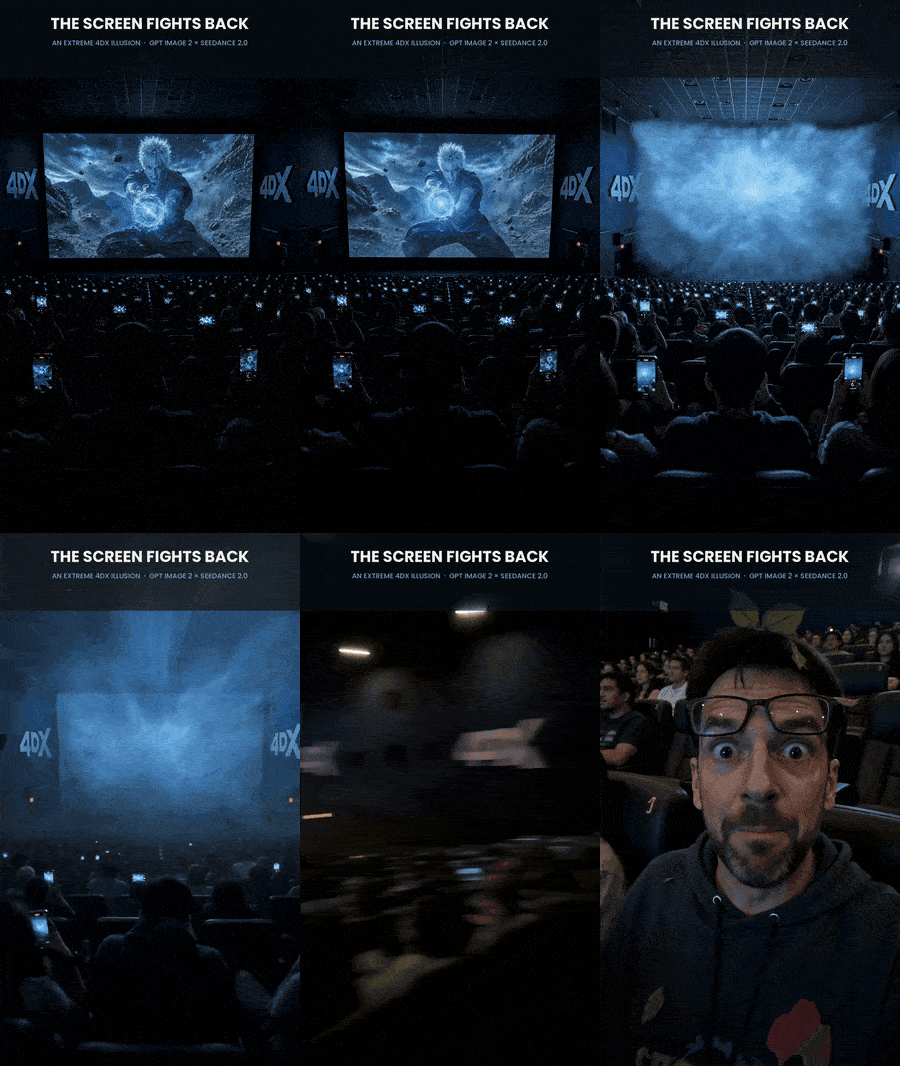
The Screen Fights Back
Faking an extreme 4DX moment — GPT Image 2 stages a packed midnight screening, then Seedance 2.0 sends the movie's energy wave off the screen and through the crowd.
A TUTORIAL BY DENIZ AKKABAK · @DENIZ.AKKABAK
PIPELINE GPT IMAGE 2 → SEEDANCE 2.0 FORMAT 9:16 · 15S · ONE TAKE GENRE CINEMA ILLUSION
Everyone has seen a 4DX seat shake. Nobody has seen the film physically leave the screen. That gap is this video's engine: a packed late-night screening, phones raised, a live-action hero charging an energy sphere — and then the shockwave crosses the screen plane and travels through the auditorium, row by row, until it passes the camera and flattens the guy behind it. Two generations, one illusion: a still image that stages the theater, and a timed shot list that breaks its fourth wall.
THE PIPELINE AT A GLANCE
- 01
Stage the screening
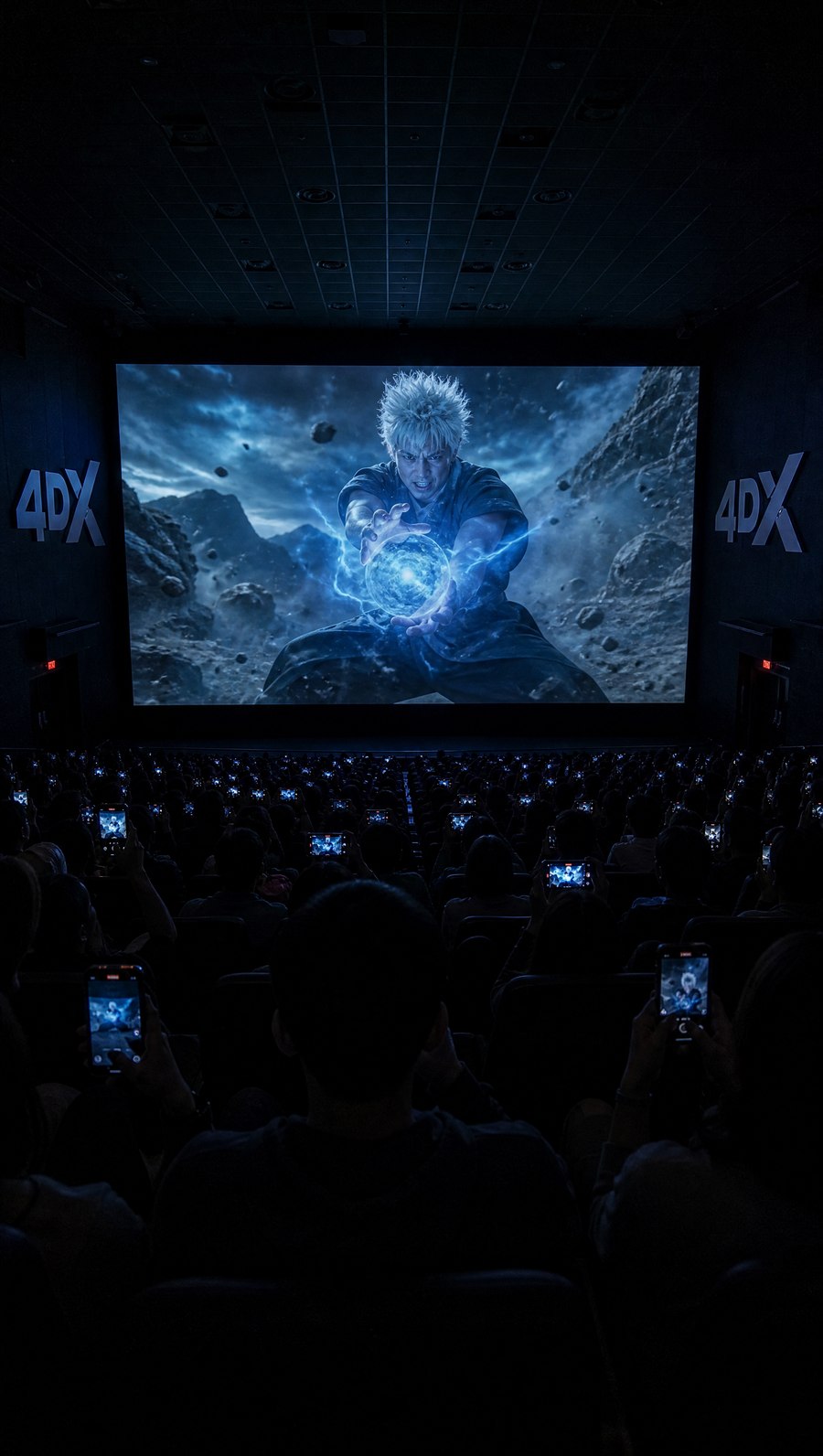
GPT Image 2 generates the theater still from text alone — the dark auditorium, the glowing phones, the wall signs, and the movie moment frozen on screen. This image becomes the world the video must obey.
- 02
Break the fourth wall
Seedance 2.0 takes that still as Reference 1 and executes a timed shot list: the charge-up, the thrust, the wavefront crossing into the room, the row-by-row sweep, and the deadpan punchline behind the camera.
STEP 01
GPT Image 2 — Staging the Screening
No reference goes in — the whole theater is written. The prompt works in three layers, and it helps to see them before you paste it: the auditorium (darkness, silhouettes, raised phones as scattered light sources), the film on the screen (a live-action, shot-on-film frame with the energy sphere as a real light source), and the photographic layer (high-ISO noise, light falloff, wide-lens perspective — the fingerprints of a real handheld photo). Generate vertical 9:16 so the still matches the video frame it will govern.
Prompt 1
GPT IMAGE 2 · VERTICAL 9:16 · TEXT-TO-IMAGE, NO REFERENCES A wide interior photograph of a packed 4DX movie theater, shot from the back of the auditorium at a slightly elevated angle looking down over the audience toward a massive cinema screen. The theater is almost completely dark; the giant screen is the only major light source, casting a cold blue glow over the rows of silhouetted moviegoers. Dozens of audience members are holding up smartphones to film the screen, their small bright phone displays scattered like glowing rectangles across the dark seating area. Large "4DX" logos are mounted on the dark side walls of the auditorium, dimly lit, one on the left wall and one on the right wall. Exit doors and small red signage lights are barely visible in the darkness. On the giant screen: a realistic live-action film still, like a big-budget movie adaptation of an anime, shot with real actors and photoreal VFX. A young man with striking spiky white hair, wearing a dark martial-arts style costume, stands in a wide power stance and gathers a swirling sphere of blue energy and wind between his two open palms held close together. The energy ball is a glowing volumetric VFX sphere with crackling blue arcs and spiraling wind distortion around it, and it acts as a real light source: intense blue light illuminates his palms, forearms and face from below, casting hard shadows upward. His face shows visible strain — clenched jaw, furrowed brow, gritted teeth, veins slightly raised on his neck, eyes fixed on the sphere. Dust and small debris lift off the ground around him, his hair and costume pushed by the wind from the sphere. Dramatic stormy landscape behind him with rocky terrain and dark clouds. The on-screen image has true cinema texture: shot-on-film look, 35mm grain, shallow depth of field with the character sharp and the background falling soft, moody desaturated grade with the blue energy kept vivid, natural skin texture on the actor's face, 2.39:1 widescreen framing filling the theater screen. The photograph itself looks like a real handheld photo taken inside the theater: slight high-ISO noise in the dark areas, natural light falloff from the screen into the room, the screen slightly brighter than perfectly exposed, realistic perspective distortion from a wide lens, audience heads and seat backs softly silhouetted in the foreground. Use case: viral social media photo of an epic cinema moment. No watermark, no subtitles on the screen, no text anywhere except the "4DX" wall logos, no deformed hands or faces in the audience, no anime or cartoon rendering on the screen — the on-screen scene must look like live-action footage with a real actor.
OUTPUT — THE THEATER STILL
STEP 02
Seedance 2.0 — Sending the Wave Into the Room
Switch to Seedance 2.0, set 9:16 and 15 seconds, and attach the Step 01 still as the only reference. The prompt below is a timed shot list inside one unbroken handheld take: four seconds of normal screening to establish reality, a two-second coil, then the thrust — and from six seconds on, the impossible thing is described with rigorous physical logic: the wavefront occludes the front rows, casts racing shadows on the walls, and people duck in sequence as it reaches them. The final beat whips the camera 180 degrees for the punchline.
REFERENCE INPUT
Prompt 2
SEEDANCE 2.0 · 9:16 · 15S · ONE CONTINUOUS HANDHELD TAKE
15s / 9:16 vertical / extreme 4DX cinema illusion / single continuous handheld take
Raw documentary phone-in-the-theatre aesthetic, amateur smartphone capture, natural handheld sway with hard startled jolts at the blast, rolling shutter wobble, phone auto-exposure locked on the bright screen so the room reads dark, exposure blooming as the wave passes, autofocus hunting, no cinematic grading, sharp phone sensor detail.
Match Reference 1 exactly - the dark auditorium, the crowd holding glowing phones, the grey 4DX wall signs, and the film on screen: a live-action fantasy movie, a man with spiky white hair in a blue outfit crouched in a rocky storm-lit canyon, charging a glowing blue sphere of swirling wind and energy between his hands. Preserve his face, hair and screen image style.
0-4s: Normal screening filmed from a middle-row seat. On screen the man strains against the growing sphere, arms trembling, blue lightning crackling, the screen light pulsing over the rows. 4-6s: He drags the sphere back beside his hip, body coiling for momentum, the rumble deepens, seats tremble. 6-9s: He thrusts both hands forward - a visible glowing blue energy wavefront bursts off the screen, crosses the screen plane and physically travels through the auditorium air from the screen toward the back rows, a churning wall of light, wind and dust moving above the seats, occluding the front rows as it passes over them, casting racing shadows across the walls and 4DX signs. Small rocks, branches and leaves from the canyon tumble inside the wave over the audience. 9-12s: The wavefront sweeps row by row toward the camera and past it - people duck low in sequence as it reaches them, caps and popcorn ripped backward, hair and jackets whipped flat, debris and leaves raining between the seats, screams, the camera jolts hard as the wave passes overhead and continues to the back wall, dust swirling in the screen light. 12-15s: The wave dies against the back wall. The camera whips around 180 degrees to the row behind: a middle-aged man sits frozen in stunned silence, eyes wide, mouth open, his glasses knocked crooked across his face, leaves in his hair - he holds the deadpan shocked stare for a beat, then snaps out of it and yells "Dude, that was AWESOME!". Hard stop, no fade.
Diegetic film audio - crackling energy and a deep charging hum escalating; at the thrust a massive WHOOMP, then a roaring wind wave audibly traveling front-to-back through the room with low-frequency pressure, debris clattering off seats, screams in sequence as it passes; sudden near-silence with dust settling, ringing ears ambience, then the stunned man's clear voice: "Dude, that was AWESOME!", no music, no voiceover.
no cuts, no zoom, no gimbal smoothness, no cinematic grading, no cartoon, no anime style, no distorted faces or hands, no injuries, no screen tearing, no fire, no caption overlays, no subtitles, no watermarks.
STEP 03
Anatomy — Why the Illusion Holds
- 1
Reality first
The first four seconds are deliberately boring — a normal screening, phone sway, screen glow. The illusion only lands because the video spends a quarter of its runtime proving nothing unusual is happening.
- 2
Amateur camera as alibi
STYLE orders autofocus hunting, rolling shutter, auto-exposure locked on the screen and hard startled jolts. Every flaw is an alibi: polished footage reads as VFX, broken footage reads as witness.
- 3
Physics for the impossible
The wavefront is impossible, but everything it does is physical — it occludes rows, casts moving shadows, rips caps backward, and carries canyon debris from the movie's world into the room. Consistent consequences make a fake event feel documented.
- 4
Front-to-back choreography
The wave travels in one direction and people react in spatial order, row by row. That sequential timing is what the brain reads as a real pressure wave instead of an overlay effect.
- 5
Sound crosses first
The audio makes the breach audible: diegetic film sound, the WHOOMP, wind traveling front-to-back with low-frequency pressure, then ringing-ears near-silence. The ear accepts the fourth-wall break before the eye does.
- 6
The punchline pivot
The 180-degree whip to the stunned man — crooked glasses, leaves in his hair, one silent beat, then his verdict — converts a disaster beat into a comedy beat and hands the clip its shareable ending.
- 7
The insurance
NEGATIVE PROMPT protects both layers at once: no cuts or gimbal smoothness (the witness alibi), no anime or cartoon look (the on-screen film stays live-action), no injuries and no fire (the chaos stays fun, not frightening).
THE RESULT
Output — Fifteen Seconds Past the Fourth Wall
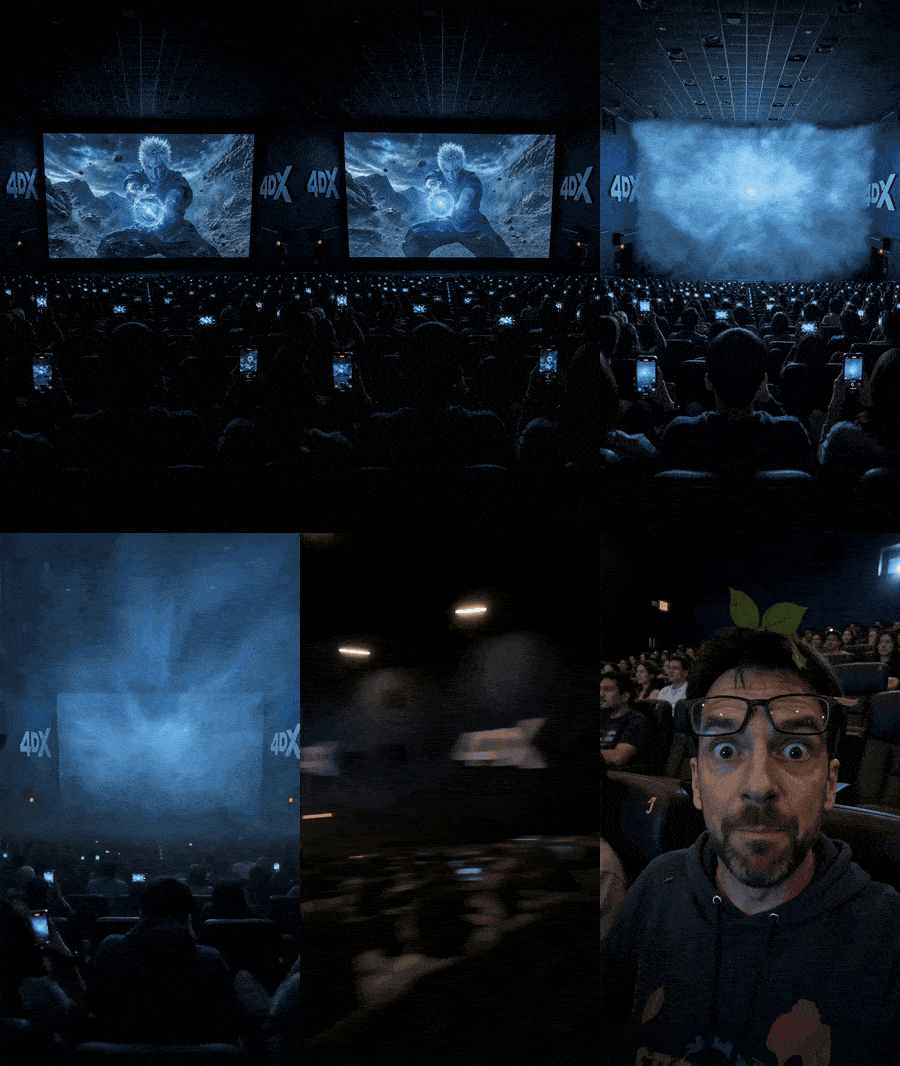
Check it against the shot list: the screening stays ordinary until six seconds, the wavefront crosses the screen plane exactly on the thrust, the rows duck in sequence, the camera jolts as it passes overhead, and the clip ends on the stunned man's line with a hard stop. A timed shot list, obeyed to the second.
SELL THE ROOM. THEN BREAK IT.
An illusion is just physics applied to the impossible.
Swap the energy sphere for a dragon, a flood or a starship jump: stage the venue in one still, then let the screen spill into it with consequences the room must obey. The two-step pipeline carries any fourth-wall break you can write.
WRITTEN, DIRECTED & PROMPTED BY DENIZ AKKABAK · @DENIZ.AKKABAK